| All projects |

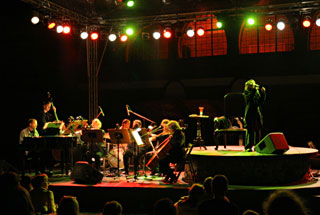
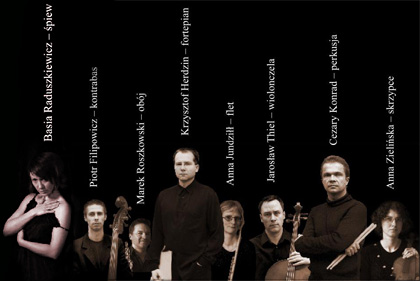
 Sappho12 songs to the words of the classical poet.Music and text's arrangement: Jarek Kordaczuk Vocal: Basia Raduszkiewicz  

Similar to God The Moon Has Already Set At the Dark Night My Little Soul I've Got a Daughter How Much Time Has Passed And I Desire You Oh, Sappho I Also Love Bliss We Sleepless Girls Good That You Came Believe Me 
 Similar to God seems to me this man That sits opposite and carefully with rapture listens to you enchanted When you smiles sweetly my heart When you smiles sweetly frightened in chest trembles anxiously my heart When you smiles sweetly my heart When you smiles sweetly frightened in chest trembles anxiously While observing you my heart in chest trembles anxiously, frightened While observing you a sound out of my larynx While observing you my heart in chest trembles anxiously, frightened While observing you I can't utter a sound out of my larynx I can't find my tongue, the words fade away I can't find my tongue, the words fade away Tardy flame pierces my body the words fade away pierces my body The eyes lose their light Once again piercing hum will catch my ear Once again piercing hum will catch my ear I can't find my tongue, the words fade away tardy flame pierces my body I can't find my tongue tardy flame The eyes lose their light The eyes lose their light Once again piercing hum will catch my ear Once again piercing hum will catch my ear Bathed in sweat,trembled, frightened more green than the green grass I feel that in a moment I will lose my life Bathed in sweat,trembled, frightened more green than the green grass I feel that in a moment I will lose my life I will faint I will faint violently Similar to God seems to me this man I must grin and bear it all The Moon has already descended Pleiades' midnight passes Time passes And I'm lonely in my bed Time passes and nobody stops Only the midnight's frail arms wrap me around She is only for me I am only for her Only the midnight's frail arms wrap me around She is only for me I am only for her The Moon has already descended Pleiades' midnight passes Time passes And I'm lonely in my bed Time passes and nobody stops Only the midnight's arms wrap me around Time passes Only the midnight's frail arms wrap me around She is only for me I am only for her Only the midnight's frail arms wrap me around She is only for me I am only for her Like a sweet shiny red apple On a very top of a tree That noone noticed They forgot No they just couldn't reach it The Moon has already descended Pleiades' midnight passes Time passes And I'm lonely in my bed Time passes and nobody stops Only the midnight's frail arms wrap me around She is only for me I am only for her She is only for me I am only for her She is only for me I am only for her She is only for me I am only for her By the dusky night you come as a dream you come, you come as a dream as a sweet God By the dusky night you come as a dream you come, you come as a dream as a sweet, as a sweet God and all the worries are gone for real although I am exhausted although I am exhausted the hope tells me that I will survive that I will survive I require nothing from the deadmen Oh my soul, don't speak anymore don't speak anymore You'll scare away Adonis's face one goddess' worries one goddess' Do not demand more tunes My lips captivated by desire Shameful in this world Do not demand more tunes My lips captivated by desire Shameful in this world Aphrodite is playing with my heart Enchantingly coating my lips with nectar I am losing my mind I have a daughter like a golden flower I have a daughter, her name is Kleis I won't give my beloved Not for any beautiful land I have a daughter like a golden flower I have a daughter, her name is Kleis In her beauty all my care In her fragility all my love I hide her at home, because her body is burning Unknown lust for love I lock her at home, because I know it's too early She wants to know the sweetness of love to know the sweetness of love That to destruction leads I lull my daughter tormented by a sweet passion desire I chase the lusty dreams away I snatch her from the lovers' arms He to destruction leads How much time had passed since I met you? How much time had passed since I met you? Then you seemed to me a little innocent girl Then you seemed to me a little innocent girl I was dressed in a long dress, a beautiful gift And you were charmed by a girl, That wasn't able to pull her dress up the ankle And you were charmed by a girl, That wasn't able to pull her dress up the ankle How much time had passed since I saw you? How much time had passed since I saw you? When you were a little innocent girl When you were a little innocent girl You treated me harshly And they were mocking me And you were boasting about gaining love for the second time And you were boasting about gaining love for the second time about gaining for the second time you were boasting love And they were mocking me And you were boasting So much time had gone since, I met you? Since an innocent girl grabbed my soul Since an innocent girl grabbed my soulê Since an innocent girl grabbed my soul again You will die and be forgotten no rose will adore you you will roam pale among the cold-eyed deadmen's herd How much time had passed since I met you? And I want you And I am fading in my desire And know my hands won't touch the sky I covered myself with a delicate sheet A somber dream had taken possession of eyes I covered myself with a delicate sheet A sweet dream had taken possession of eyes And I want you And I am fading in my desire And know my hands won't touch the sky And I want you Oh Sappho! Or I will stop loving you Show me yourself, stand up from a bed, straighten your prayed body And throw these intrusive clothes from Chios away Take a bath like a pure lily Kleis should bring a cedarwood oil The new sapphire dress and purple coat put on While you'll be dressing I'll plait the chaplets for your hair hurry up, because your beauty bewilders me Like the stars round the moon lose their light Like the moon silvery shines over the earth Like the stars round the moon lose their light Like my beauty fades away when I'm close to you I'm ashamed to tell what I desire You must know that I was praying for our night to be longer Now, let the sunrays embrace your naked body Show yourself, otherwise I'll stop loving you I love delight as well And this brightness Similar to the love of the sun I love this brightness similar to the love of the sun as well I love delight as well And this brightness Similar to the love of the sun My beauty is proper for me, My beauty is proper for me I love delight as well delight and this brightness, brightness brightness, brightness similar to the love of the sun Similar to the love I love this brightness similar to the love of the sun as well we sleepless girls about great love sang about your beloved beloved and her violet bosoms we sleepless girls about a great loneliness sang and about all those lonelinesses lonelinesses that will come us girls, us sleepless suffering doesn't fit us so we hide behind a cheerful or a hidden face us girls, us sleepless anger doesn't fit us so we paint a bright or a hidden look we sleepless girls are needed at sleepless nights just like sleeples nights are at no use at all we sleepless girls are needed on astray days when your beloved is gone with her violet bosoms we sleepless girls about a great loneliness sang and about all those lonelinesses lonelinesses that will come it's good you came I was dying for you it's good you came it's good you came my heart trembles cheerfully when my oldish body dives in the delight of your caresses and suddenly you light the fire in my heart you drink the sweet nectar of my thirsty lips my hands are stroking your divine arms my beloved my beloved, beloved I know how weak is the thread that weaves our existence How impossible love has just been fulfilled and even though I love you marry someone else Because old am I, I won't bear the burden of life so why do you kindle a fire in my heart one more time you drink the sweet nectar of my thirsty lips my hands are stroking your divine arms my beloved my beloved, my beloved my beloved, beloved, my beloved
Sappho (red. Jarek Kordaczuk) Similar to God Similar to God seems to me this man That sits opposite and carefully with rapture listens to you enchanted When you smiles sweetly my heart in chest Trembles anxiously, frightened While observing you I can't utter a sound out of my larynx I can't find my tongue, the words fade away Tardy flame pierces my body, The eyes lose their light, Once again piercing hum will catch my ear Bathed in sweat,trembled, frightened More green than the green grass I feel that in a moment I will lose my life, I will faint violently I must grin and bear it all
Sappho (red. Jarek Kordaczuk) The moon has descended The Moon has already descended Pleiades' midnight passes, Time passes, And I'm lonely in my bed Time passes and nobody stops Only the midnight's frail arms wrap me around She is only for me I am only for her Like a sweet shiny red apple On a very top of a tree That noone noticed They forgot No, they just couldn't reach it
Sappho (red. Jarek Kordaczuk) By the dusky night By the dusky night you come as a dream, as a sweet God and all the worries are gone for real although I am exhausted, the hope tells me that I will survive, I require nothing from the deadmen
Sappho (red. Jarek Kordaczuk) Oh my soul Oh my soul, don't speak anymore, You'll scare away Adonis's face, one goddess' worries Do not demand more tunes. My lips captivated by desire, Shameful in this world Aphrodite is playing with my heart, Enchantingly coating my lips with nectar I am losing my mind
Safona (red. Jarek Kordaczuk) I have adaughter I have a daughter like a golden flower I have a daughter, her name is Kleis I won't give my beloved Not for any beautiful land I have a daughter like a golden flower I have a daughter, her name is Kleis In her beauty all my care In her fragility all my love I hide her at home, because her body is burning Unknown lust for love I lock her at home, because I know it's too early She wants to know the sweetness of love That to destruction leads I lull my daughter tormented by a sweet passion desire I chase the lusty dreams away I snatch her from the lovers' arms He to destruction leads
Sappho (red. Jarek Kordaczuk) How much time had passed How much time had passed since I met you? Then you seemed to me a little innocent girl I was dressed in a long dress, a beautiful gift And you were charmed by a girl, That wasn't able to pull her dress up the ankle How much time had passed since I saw you? When you were a little innocent girl You treated me harshly And they were mocking me And you were boasting about gaining love for the second time So much time had gone since, I met you? Since an innocent girl grabbed my soul (a liver) You will die and be forgotten no rose will adore you you will roam pale among the cold-eyed deadmen's herd
Sappho (red. Jarek Kordaczuk) And I want you And I want you And I am fading in my desire And know my hands won't touch the sky I covered myself with a delicate sheet A somber dream had taken possession of eyes
Sappho (red. Jarek Kordaczuk) Oh Sappho Oh Sappho! Or I will stop loving you Show me yourself, stand up from a bed, straighten your prayed body And throw these intrusive clothes from Chios away Take a bath like a pure lily Kleis should bring a cedarwood oil The new sapphire dress and purple coat put on While you'll be dressing I'll plait the chaplets for your hair hurry up, because your beauty bewilders me Like the stars round the moon lose their light Like the moon silvery shines over the earth. Like my beauty fades away when I'm close to you I'm ashamed to tell what I desire You must know that I was praying for our night to be longer Now, let the sunrays embrace your naked body Show yourself, otherwise I'll stop loving you
Sappho (red. Jarek Kordaczuk) I love delight as well I love delight as well And this brightness Similar to the love of the sun My beauty is proper for me
Sappho (red. Jarek Kordaczuk) We sleepless girls we sleepless girls about great love sang about your beloved and her violet bosoms we sleepless girls about a great loneliness sang and about all those lonelinesses that will come suffering doesn't fit us sleepless girs so we hide behind a cheerful or a hidden face anger doesn't fit us sleepless girls so we paint a bright or a hidden look we sleepless girls are needed at sleepless nights just like sleeples nights are at no use at all we sleepless girls are needed on astray days when your beloved is gone with her violet bosoms
Sappho (red. Jarek Kordaczuk) it's good you came it's good you came I was dying for you it's good you came I was waiting so long my heart trembles cheerfully when my oldish body dives in the delight of your caresses and suddenly you light the fire in my heart you drink the sweet nectar of my thirsty lips my hands are stroking your divine arms my beloved I know how weak is the thread that weaves our existence How impossible love has just been fulfilled and even though I love you marry someone else Because old am I I won't bear the burden of life so why do you kindle a fire in my heart one more time
Sappho (red. Jarek Kordaczuk) believe me believe me I'd like to die despairing crying words full of sorrow voice of dread gods called you to the other side don't forget me but if you were to forget I'll remind you myself how many beautiful days we went through how you enjoyed adorning your hair with flowers that smells freshly and chaplets of violets and roses or on soft pillows on a neat, tender bedding you lied to quench girls' desire with you my sweet beauty is playing golden Aphrodite girl with a sweet voice more sonorous than lyre more golden than gold whiter than milk softer than water more melodious than lyra more haughty than horse more florid than rose hotter than fire brighter than sun more delicate than air more fragrant than oils you look so beautiful in this transparent blouse you look so beautiful in these silky robes in which Charon admires you Will you love any of Gods more out of them only Charon won't let the hope rise when you are covered with black soil don't forget me
Sappho directory listing, 1 file(s) found, ready to download after
login: 
|
                        
|
|